

People Aren't Angry About a Logo
They're angry about the erasure of humanity

The unrestrained fury with which the general public responded to a proposed rebrand of the country-kitsch-themed chain restaurant Cracker Barrel seems to have caught some observers by surprise.
Allow me to explain. It’s not about Cracker Barrel. Cracker Barrel just happened to be the straw that broke the camel’s back.
In psychology, it’s well known that if a person has a disproportionately negative reaction to a seemingly trivial provocation, it’s not about the provocation, it’s about everything prior that went unacknowledged and unresolved. That’s exactly what happened here.
The provocation was an ill-considered proposal to scrub a popular eatery of its distinctive, old-timey décor. The response was a scorched-earth campaign that led to an abrupt $100 million drop in the company’s market value, with social media commentators denouncing the Cracker Barrel CEO as a criminal.

While corporate rebrands have faced varying levels of resistance in the past, Cracker Barrel touched a nerve in the same way, and for the same reason, that the designs unveiled by GAP and Tropicana did, over a decade ago.
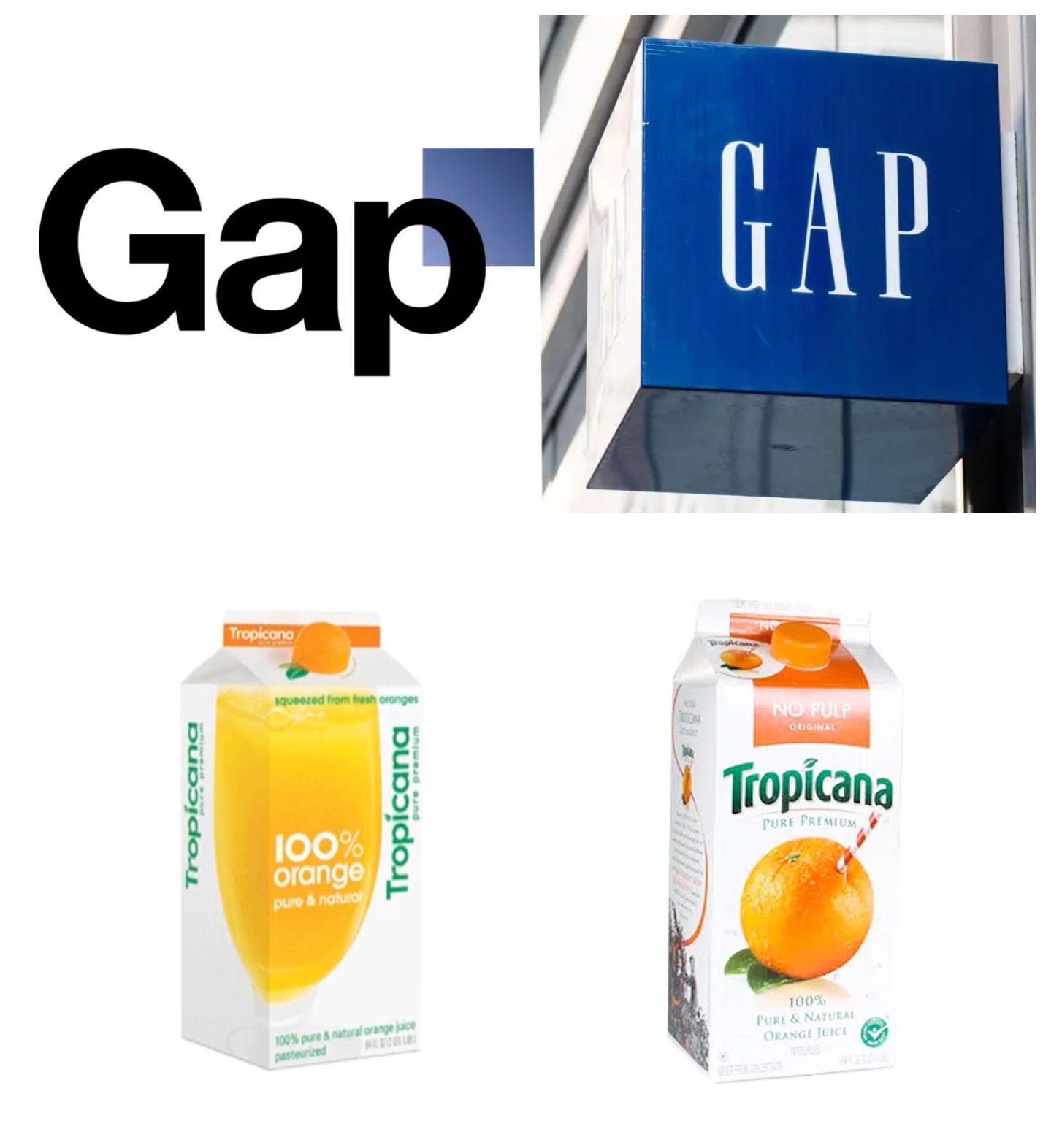
Pundits attribute artwork-driven outrage to everything from racism to the stupidity of consumers who resist change. But this superficial criticism betrays a fundamental misunderstanding of both the human psyche and the function of design. Symbols are powerful because they are imbued with meaning beyond the thing they represent. That’s why the flag of the United States evokes a different set of feelings and ideas than the flag of China or the Soviet Union does.
In the case of Cracker Barrel, Gap, and Tropicana, the old artwork included decorative elements, such as typographic serifs and illustrations, that were intended to appeal to the human eye. The unspoken meaning, beyond the commercial use, was “you, a human being, are important.” However, the redesigned artwork replaced those ostensibly superfluous elements with blocky, minimalist imagery that was better-suited to being displayed on screens and devices. The aesthetic shifted from human-centered to machine-centered.
People may not have known why they hated the new designs, but, at least in part, it was because they were being told they were no longer important. The new symbols weren’t just a refresh, they were a signal that the primacy of humanity was being usurped by the primacy of technology.
In other words, without anyone at Gap, Tropicana, or Cracker Barrel being aware of it, their use of symbolism aimed a spotlight at the unspoken truth about the creeping dehumanization of society. This, in a nutshell, is exactly what has gone unacknowledged and unresolved for decades. It is the reason for the pent-up anger that periodically explodes with inexplicable force when triggered by a seemingly uncontroversial branding refresh.
On a subconscious level, we know that this trend – a change in focus from human to machine – isn’t limited to brandmarks and décor. The deliberate erasure of familiar aspects of culture and commerce is perceived by many people as merely one part of a broader effort to reshape human society into a soulless, globally homogeneous, technocratic dystopia. A future in which humans are not viewed as important because they have intrinsic worth, but are regarded as disposable “wetware,” useful only until they can be replaced by cleaner, more reliable hardware and software.
Thus, in the same way that protesters will burn a country’s flag because of what it represents, the public’s anger is directed at redesigned logos because of what they, too, represent: a progressive diminution of the significance of humanity in the eyes of governments, corporations, and major institutions.
Sadly, although irate diners and politicians may have won this particular battle (Cracker Barrel announced that it would scrap the rebrand), the war is not looking good. From datacenters driving up the cost of energy for families, to the projected replacement of millions of workers by robots and AI, the march of anti-human progress is advancing on every front.
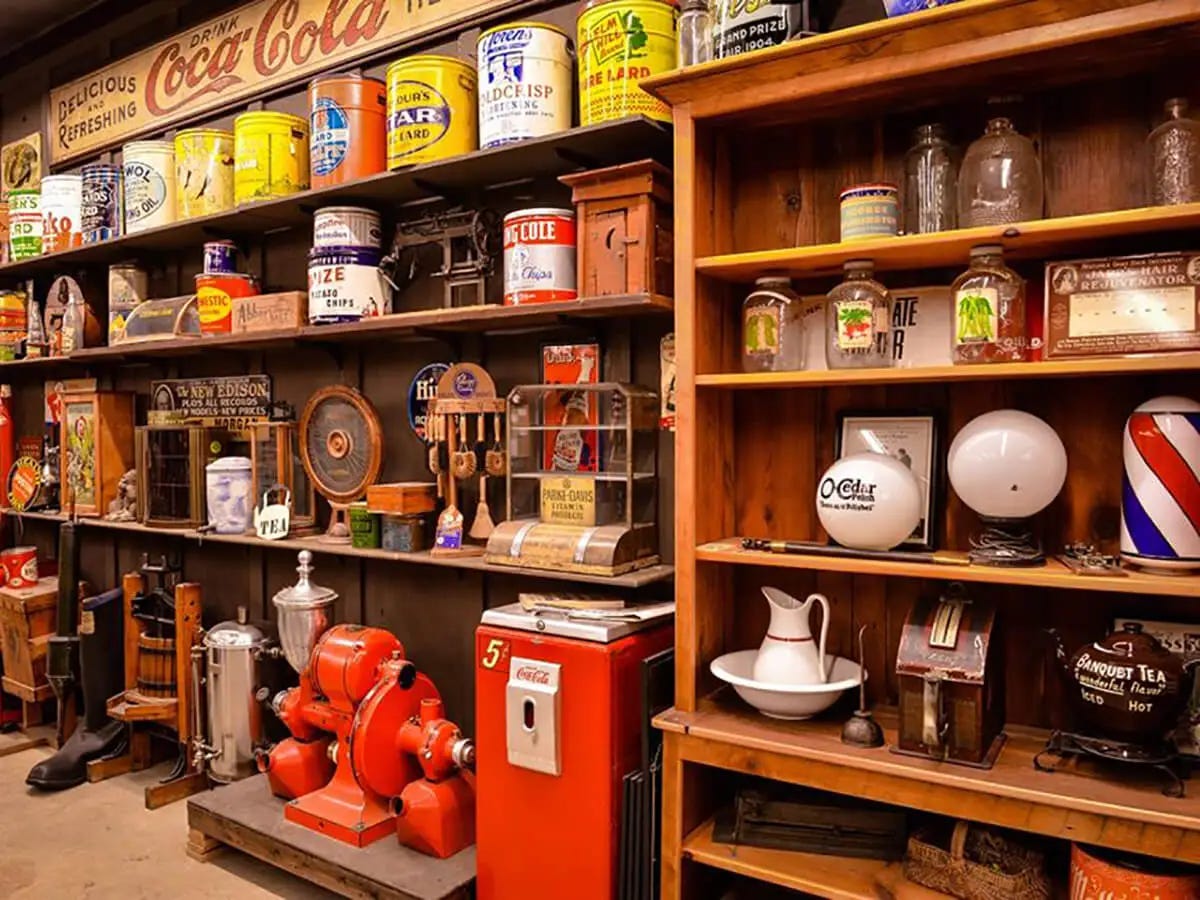
Everywhere you look, we are being shepherded into an existence in which beauty, variety, and local culture are considered – through cold, machine logic – extraneous, irrelevant, and counterproductive to the bottom line and the greater good.
It may not be coincidental that a big part of Cracker Barrel’s charm is its in-store visual homage to a simpler, less technologically-focused time. Perhaps the real lesson of the redesign debacle is not that we should fetishize the human-centered past, but that we should make a deliberate effort to reclaim it – to carry its ethos and its ideals into the present, not because of bigotry or ignorance, but because we humans need and deserve to feel more important than machines.
great writing on this complex subject. The same thing has happened in architecture. There is no more character to the place. it all looks the same. Nudge theory is invisible. Belief Comes First. Bobby will read the neuroscience article. Again, great work.
Beliefs are hard to change. Sometimes endurance is good because it makes us feel good. I appreciate your perspective and enjoy your work! Check this out as I think you will enjoy the neuropsychology support for your ideas. If you don't have access email me.
Hoffman, B., Subramaniam, A., & Hartley, K. (2025). It’s time to reconsider: The neuropsychology of belief change. Trends in Neuroscience and Education, 40, 100261.
https://doi.org/10.1016/j.tine.2025.100261